You are Not Behind. You are Misaligned.
The problem may not be your effort. It may be your direction.
You are not falling behind. You are following a timeline that was never yours.
Many people live with a quiet sense that they should be further ahead by now: Career-wise. Financially. Personally. Even spiritually.
Every scroll through, curated feeds, or career updates can turn life into a race we never agreed to run.
We compare our internal reality to someone else’s edited outcomes and then mistake that tension for failure.
But what if you are not slow? What if you are simply pointed in the wrong direction?
The issue is not speed. It is direction, the alignment between what you are doing, and what actually matters to you.
When action and values diverge, progress begins to feel heavy. The more effort you apply, the more dissatisfaction you feel.
That does not always mean you are failing. It may mean something deeper is off.
Why so many capable people feel behind

There is a reason this feeling runs so deep.
For years, many of us have measured life according to an invisible timeline:
- when we should be established,
- when we should feel certain,
- when we should have achieved enough to finally feel at peace.
Sociologist Bernice Neugarten described this as the Social Clock—the cultural expectation that life should unfold according to a fixed schedule.
So when life does not line up, the conclusion feels obvious:
- I am late.
- I missed something.
- Everyone else is moving forward except me.
But often, the problem is not that you are behind. It is that the standard you are measuring against no longer reflects reality.
Why the old timeline no longer works

1. Comparison distorts perception
The more we measure ourselves against other people’s visible milestones, the easier it becomes to misread our own lives. Upward comparison can make even real progress feel insufficient.
2. Life is no longer linear
Very few people now follow a straight, stable path from education to career to fulfillment. Modern life is marked by reinvention, pivots, delays, false starts, and redefinition.
3. Clarity often comes later
People grow into themselves over time. Identity, confidence, purpose, and direction are often formed through lived experience, not early certainty.
The result is this:
What many people call “being behind” is often a mismatch between who they are becoming, and the path they have been trying to force.
A more honest question
Instead of asking, Why am I so behind?
Ask:
- Am I building a life that actually fits me?
- Am I pursuing goals that matter to me, or just goals that sound impressive?
- Have I been calling misalignment failure?
- Am I exhausted because I am lazy, or because I am carrying a life that does not fit?
Sometimes the deepest breakthrough is not working harder.
Sometimes it is telling the truth.
What misalignment feels like

Misalignment often sounds like this:
“I should be earning more by now.
“I should be further ahead.”
“Everyone else seems to know what they are doing.”
“I have wasted too much time.”
“I keep pushing, but nothing feels right.”
This is what forced progress feels like:
- Effort without peace.
- Movement without meaning.
- Achievement without relief.
Like driving with the parking brake engaged, energy is being spent, but something in the system is resisting.
The answer is not always more acceleration.
Sometimes the answer is release.
You may not need more discipline
You may need realignment.
That begins by asking: What am I doing? I truly want it?
What am I doing because I think I should want it?What have I mistaken for success simply because it was praised by others?What would change if I stopped trying to keep pace and started trying to live honestly?
These are not small questions.
But they are often the beginning of freedom.
Real progress feels different
Real progress feels different
Real progress is not just movement. It is movement in the right direction.
- It may be slower than the culture rewards.
- It may not look impressive at first.
- It may involve detours, rebuilding, or letting go of identities that once made sense.
But it carries a different quality:
- Less strain.
- More clarity.
- Less performance.
- More integrity.
This is what happens when direction and identity begin to agree.
You are not late. You are learning alignment.
If this resonates, you are not alone.
Many adults are not failing because they lack intelligence, work ethic, or ambition.
They are struggling because they have spent years trying to succeed inside systems, timelines, and definitions that do not actually fit who they are.
That kind of life will always feel heavy.
But there is another way to move forward.
- Not by pretending the pressure is not real.
- Not by chasing motivation.
- Not by pushing harder for a life that keeps resisting.
By learning to recognize misalignment for what it is, and choosing a more honest path.
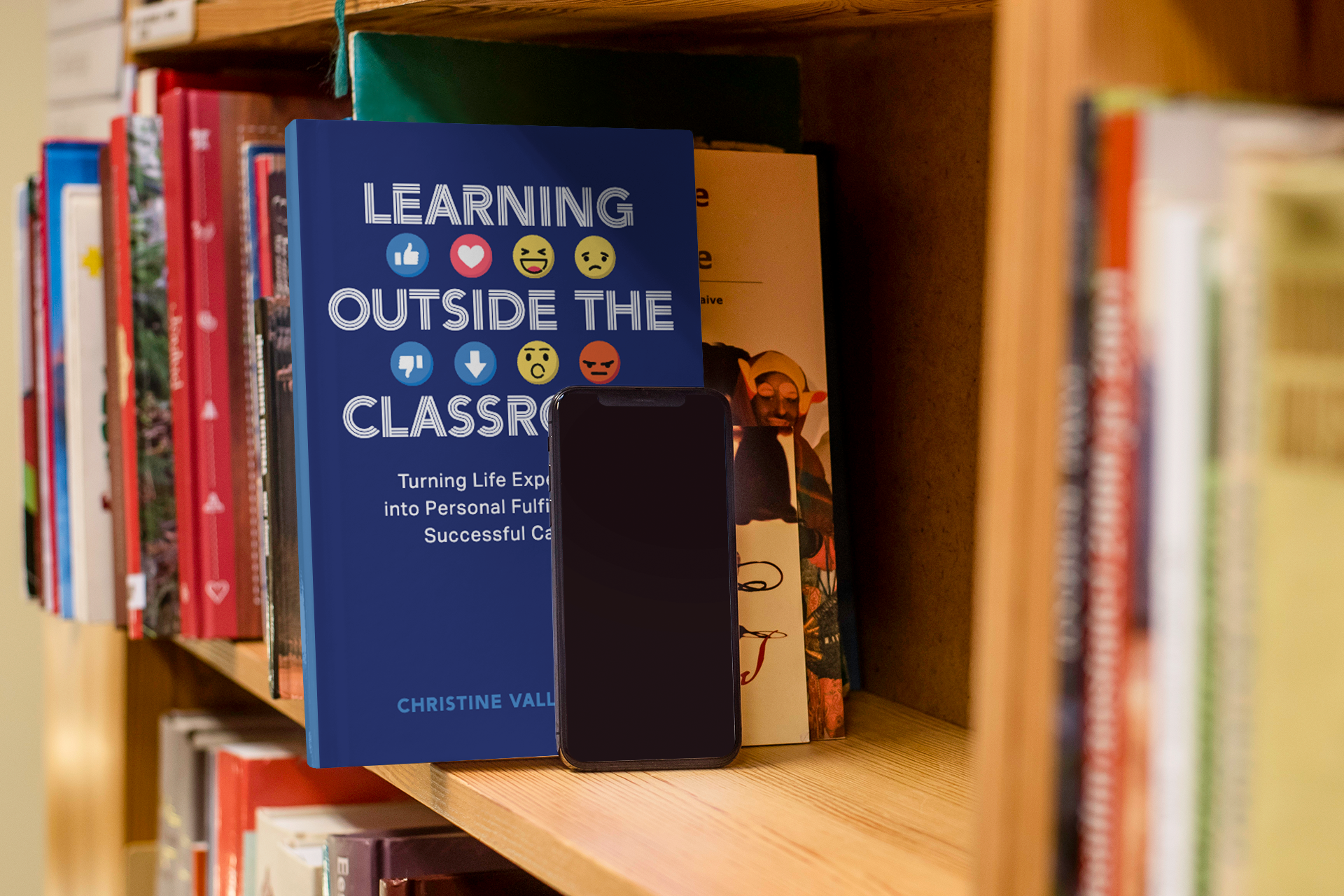
This is the conversation at the heart of my book.
In Learning Outside the Classroom, I explore what it means to grow, succeed, and build a meaningful life beyond narrow definitions of achievement.
This book is for adults who feel behind, stuck, misread, or disconnected from the paths they were told would work.
It offers a different framework: one rooted in reflection, real-life learning, personal growth, and the possibility that your life may need alignment more than acceleration.If this page felt like it was describing you, the book goes deeper.
[Get your copy of Learning Outside the Classroom on Amazon]
Or begin by asking yourself this:
What if the problem is not that you are behind, but that the path was never truly yours?